










Are you ready for AI in your health and safety work?
17 October 2025
Artificial intelligence (AI) has rapidly begun to change health and safety work in industry. The possibilities are great: fewer accidents, better risk management and a work environment where technology protects people in real time.
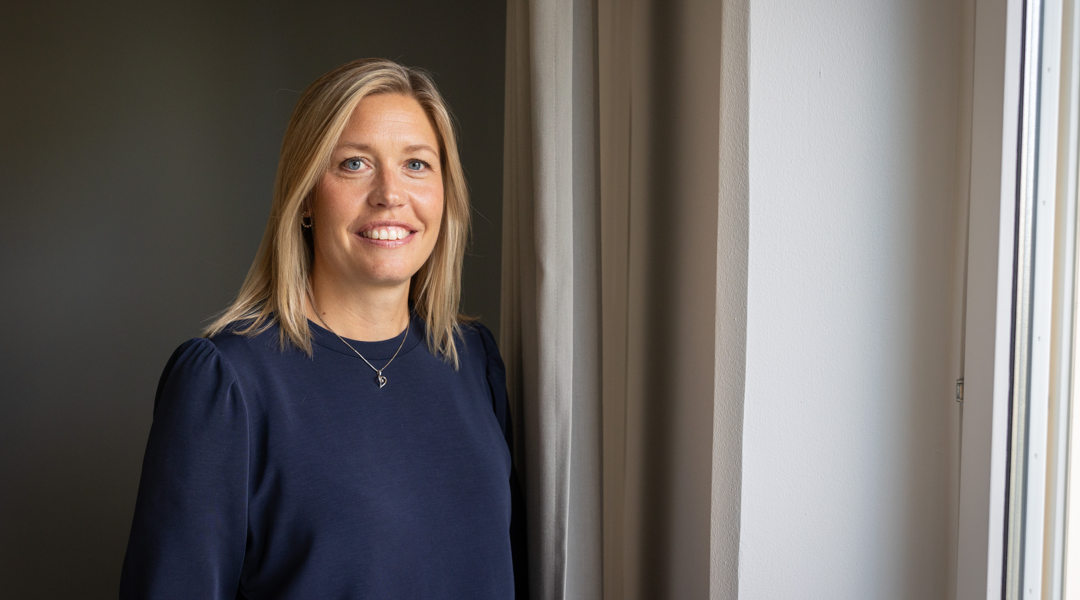
SSG’s Health and Safety Advisor Ida Karlsson writes about the introduction of AI into health and safety work.
The development, however, also entails new risks: technical dependence, unclear responsibilities and increased requirements for digital competence. Are you ready for the next step?
What does AI mean in industry today?
AI in industry is no longer something that will happen in the future – it is here and now. Through advanced data analysis, machine learning and automation, AI is now used to optimise production, maintenance and quality. But the technology is also increasingly used to improve the work environment and health and safety. The points below show some of the possibilities, and also the risks.
The new possibilities
Used in the right way, AI can become a powerful tool for creating safer work environments:
- Anticipate accidents before they happen
By analysing patterns in large amounts of data, AI can warn of previously unforeseeable situations - such as unusual heat in an engine or unusual and unsafe movement patterns of people on site. - Automate hazardous operations
Robots can take over tasks that otherwise pose a risk to people, such as handling chemicals, or drones that can inspect confined spaces and driverless trucks that reduce the risk of personal injury in collisions. - Real-time overview
AI-powered cameras and sensors can quickly identify dangerous behaviour, such as someone entering a danger zone, two machines on a collision course or lack of certain protective equipment.
But also new challenges.
The technology is not without its drawbacks. When AI systems become part of safety work, new questions arise, both practical and ethical.
- Dependent on technology
What happens if the system makes a misjudgement? If the sensors fail? Blind faith in technology can be dangerous. - Privacy issues
Cameras and sensors that follow every movement can be perceived as violating privacy. In some cases, it can lead to stress rather than a sense of safety. - Digital skills gap
As safety becomes technical, the requirements for staff’s digital knowledge increase. For those who don’t keep up with developments, this can lead to insecurity.
Another key issue is the division of responsibilities. If AI recommends an action that ultimately leads to an accident, who is to blame? The operator, the company, the manager or the person programming the systems?
Intensive legislative work is currently underway within the EU, including the EU AI Act, which regulates how AI may be used. However, developments are progressing faster than the legal process. Therefore, as with all changes in business operations, it is important to identify, assess and manage risks, including those associated with changes in working methods involving AI.
An increase in interaction between humans and AI is predicted for the future. Technology is likely to become more self-learning, more integrated into work environment systems and more autonomous. But the human factor will not disappear, on the contrary, the balance between technology and people will be more important than ever.
AI will not replace safety work and human common sense, but rather reinforce it. The best work environment is created when people are given the right tools that they learn to use.
Good luck with developments and the safety work, together with AI!